Most healthy vending advice comes from people selling a franchise, not from people restocking machines. This is written from the restocking side: what a health-led machine actually sells in South Africa, where it works, and where it quietly fails.
The one rule: audience fit beats good intentions
A “healthy row” bolted onto a standard snack machine is where good intentions go to expire. The rice cakes sit there for a month while the chocolate two spirals down does all the selling — and everyone concludes healthy vending doesn’t work.
What works is the opposite: a whole machine designed for an audience that already cares. Put health-led stock where people have pre-decided to eat better — a gym, a wellness-led office, a school with a real tuckshop policy — and it stops being the token row. It becomes the reason the machine earns.
What sells: lessons from a real gym machine
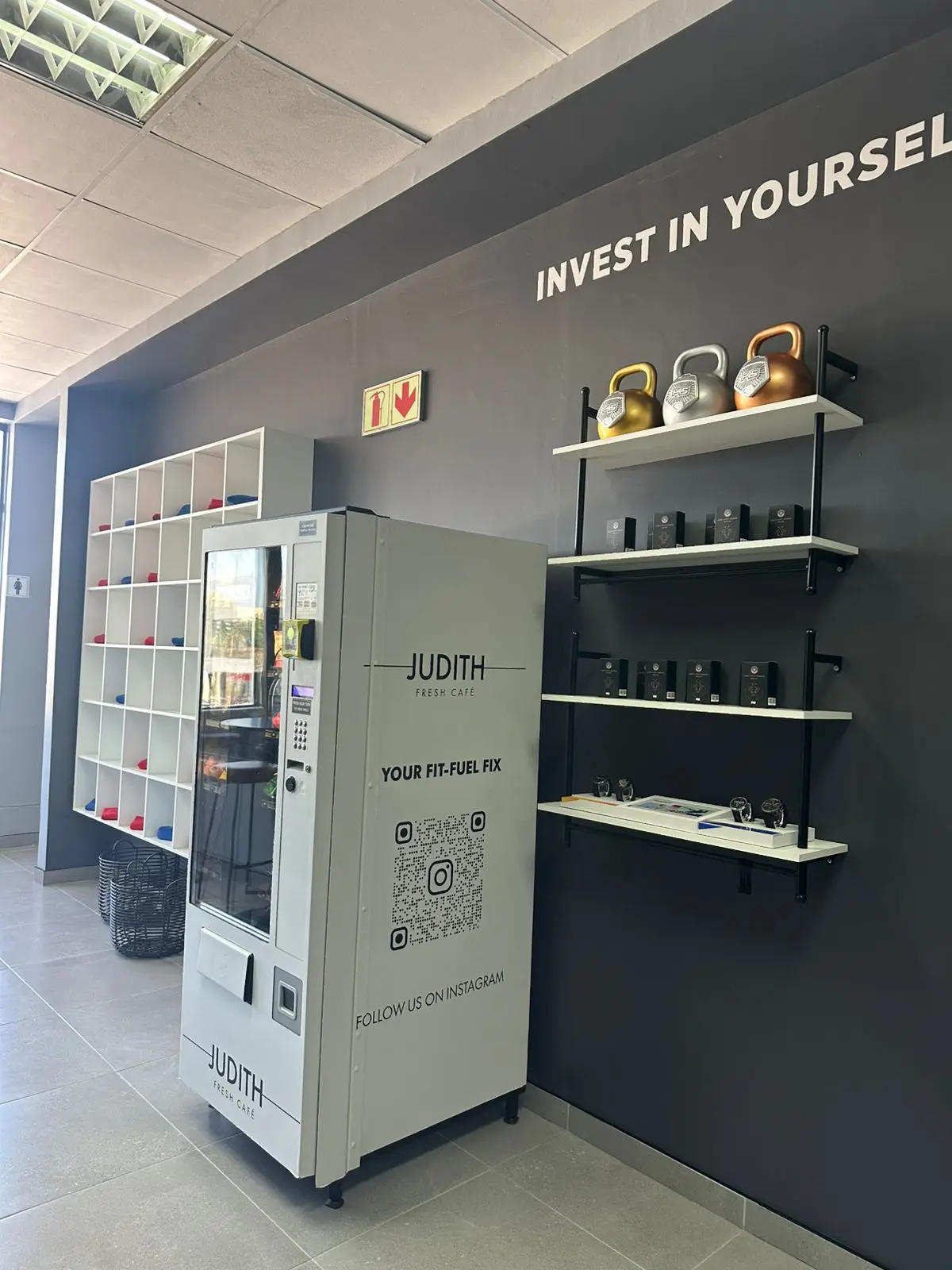
At F45 Training Durbanville we built a machine for judith fresh cafe — a compact Palma Hz70, wrapped to the studio, stocked entirely health-led. The planogram that works there:
- Biltong and droëwors — the anchor, and the machine’s proven best sellers. High-protein, local, and exactly what someone wants after training.
- Nuts and trail mixes — long shelf lives, which matters on a machine restocked weekly.
- High-protein and low-carb snacks — the category members actually scan the machine for.
- Low-sugar and sugar-free drinks — sugar-free energy drinks are a top seller here. A fridge column chosen for the audience, not the default soda wall. The same column would be a strange choice in most other sites; that asymmetry is the audience-fit rule.
Two operational details did as much work as the stock list. The machine is cashless-first — gym members don’t carry cash, and an unstaffed 24-hour site is a poor home for a cash box. And it’s wrapped to the venue, so it reads as part of the studio rather than a soda brand’s billboard.
Where healthy vending earns its place
Gyms and studios are the natural home — especially 24-hour access gyms, where the machine sells through every session reception doesn’t cover.
Schools are a natural fit. A machine with a controlled, health-led selection fits a tuckshop policy instead of fighting it, and cashless payments mean no cash on school grounds.
Wellness-led workplaces — if the company pays for gym memberships and stocks the fruit bowl, a wall of sugar in the canteen corridor is a strange exception. The fix costs nothing extra: health is a planogram, not a machine.
Healthcare sites — night staff and families deserve better than the worst options at 2am; our Tygerberg Hospital installation runs on exactly that logic.
Where it fails, honestly
Health-led machines underperform where nobody pre-decided to eat better: factory floors, transport depots, general foot-traffic sites. There, a balanced mix with a genuine healthy shelf beats a purist machine that doesn’t sell. We say this to clients before installation, because a healthy machine that earns nothing gets removed — and then nobody gets the better option.
Getting the mix right over time
Whatever the opening planogram, the machine itself settles the argument. Cashless machines report sales per product, so after the first month the mix converges on what your building actually buys rather than what anyone predicted. That feedback loop — not the opening stock list — is what keeps a healthy machine healthy and solvent.
Planning one? Start with the healthy vending machines page for planograms, machines and pricing, or talk to us about your site — gym, school, office or ward.